“We’re restructuring, Jatin. You’ve done well, but your role is… well, redundant.”
Jatin was not prepared for the words his boss spoke that morning. The sentence rang in his ears like the hollow clang of an iron gate closing. He had been one of the top performers in Sales, meeting or exceeding targets, diligent in his duties. Yet by afternoon he was walking out of the office with his belongings packed into a cardboard box and the weight of the future pressing against his chest.
When he reached home, an envelope lay waiting at his door. He was a little amused — he hardly ever got any post. Inside was a single sheet of paper and a flight ticket to Delhi for later that day. The note, unsigned but stamped with an enigmatic Mr. Y, read:
“I am sorry to hear of your loss of job. Another opportunity awaits you. If you are willing, take the flight enclosed. A car will bring you to me.”
Jatin froze. He had lost his job only hours ago. How could anyone in Delhi know already? How had the letter arrived before he had even reached home?
His first reaction was to tear it up. But with nothing left to lose, he packed a small bag and went to the airport.
At Delhi airport, a stocky, well-built man stood holding a plaque bearing his name. “I am Mr. Y’s chauffeur-cum-butler. We drive to Dehradun,” the man said curtly, without even offering his name. The car was new, gleaming, and luxurious. The butler drove in silence, making no effort for conversation. His responses to Jatin’s questions were curt, mostly in monosyllables. Seeing he had no interest in talking, Jatin stopped trying and closed his eyes. On the way, they stopped for dinner at a small roadside restaurant, where Jatin’s meal was silently paid for. It unsettled him more than it comforted. Whoever Mr. Y was, he had wealth, power, and knowledge that reached too far.
They arrived around midnight at a sprawling colonial bungalow in the outskirts of Dehradun. In almost total darkness around it, the bungalow stood alone and isolated, its windows dim, its gates creaking open like a secret being revealed. The stillness of the place was palpable, as if time itself had forgotten it. The butler led Jatin to a furnished guest room. “Mr. Y will see you in the library on the ground floor in half an hour, once you’ve freshened up,” he said, then vanished into the silence.
The house had high ceilings, rustic but polished wooden furniture, and an atmosphere that seemed to breathe. It reminded Jatin of haunted mansions from old films, except here the dread felt sharper, more intimate.
Just after midnight, he climbed down and entered the library. The air smelled faintly of roses and old books. On one side of the room, a fireplace crackled, its orange glow the only light. Shelves of books loomed on his right, half-hidden in shadow. In a worn armchair next to the fire sat a frail old man wrapped in a shawl, his long shadow sprawled on the wall behind him. His eyes, however, glowed sharp, like embers refusing to die.

“Please sit,” the old man said. “And pardon the darkness. I cannot bear those bright, artificial lights anymore. The embers soothe me better.”
Then, looking directly into Jatin’s eyes, he said, “You wonder why you are here.” His voice was soft, but it carried.
Jatin nodded as he settled into a big overstuffed chair opposite Mr. Y. “Yes. You mentioned a job opportunity in your letter. But it was vague on what the job is.”
Mr. Y reached toward the table to his left where a rose lay shrivelled, its petals brittle and dry. With the lightest touch of his finger, the rose straightened, bloomed, its colour returning as though time itself had been reversed.
Jatin stared, breath caught.
“This,” said Mr. Y, “is why.”
Jatin whispered, “What… are you?”
“A caretaker,” Mr. Y replied. “Of a gift… and of its burden. To touch and return life where it still clings. But not everywhere, and not for everyone. That would break the rhythm of existence, the circle of life and death. The gift that I have, it chooses. I always know instinctively who can be healed, and who must pass.”
“And you expect me to… somehow be a part of this?” Jatin asked, thunderstruck. Fear was beginning to creep in.
“Not a part,” Mr. Y said. “I want you to own it. To take over from me completely. I have done this long enough, concealing my identity, offering the hand of healing where it was needed. That is why I live here, away from the bustle of the world. Always unseen. Always passing through. Imagine if people find out that I have the gift to bring dead people back to life?”
“I don’t want this,” Jatin said sharply. “Unlike you, I love living with family, friends, people. I cannot give all that up, even if your cause is noble.”
Mr. Y’s lips curled faintly. “Neither did I want this. But you and I are ordained. There are powers at play, beyond human imagination. I do not know who I represent. But I know this: some lives are not meant to be lost untimely.”
“Why me?” Jatin asked bitterly.
“That I cannot explain,” the old man responded. “The consciousness behind all this probably knows that you are compassionate at heart — somebody who would rush to help people, somebody who can carry this millstone with a smile. That is the only plausible explanation I can give you.”
Jatin’s eyes fell on the rose, still impossibly alive. He picked it up, turned it slowly in his hand.
“This flower,” he said tightly, “is proof of what you call a gift. But for me, it’s a warning. Because no miracle can change the price of this life you want me to live. A life in hiding, stripped of everything that makes it human. I refuse.”
He placed the rose back on the table firmly, almost defiantly and stood up from his chair. “I want to live life my own way. A normal life.”
Mr. Y’s lips curved faintly, his voice barely a whisper. “You may have already given it up more than you realize.”
In his rush to storm out of the room, Jatin missed those words. Passing the butler in the hallway, he demanded his luggage. Outside, the gravel driveway was dark except for a lone streetlamp that diluted the ink of the night. Beneath it, a homeless beggar convulsed violently, body wracked with spasms.
Jatin ran instinctively, knelt, and lifted the man’s head. His palm brushed the brow, pushing back unkempt hair.
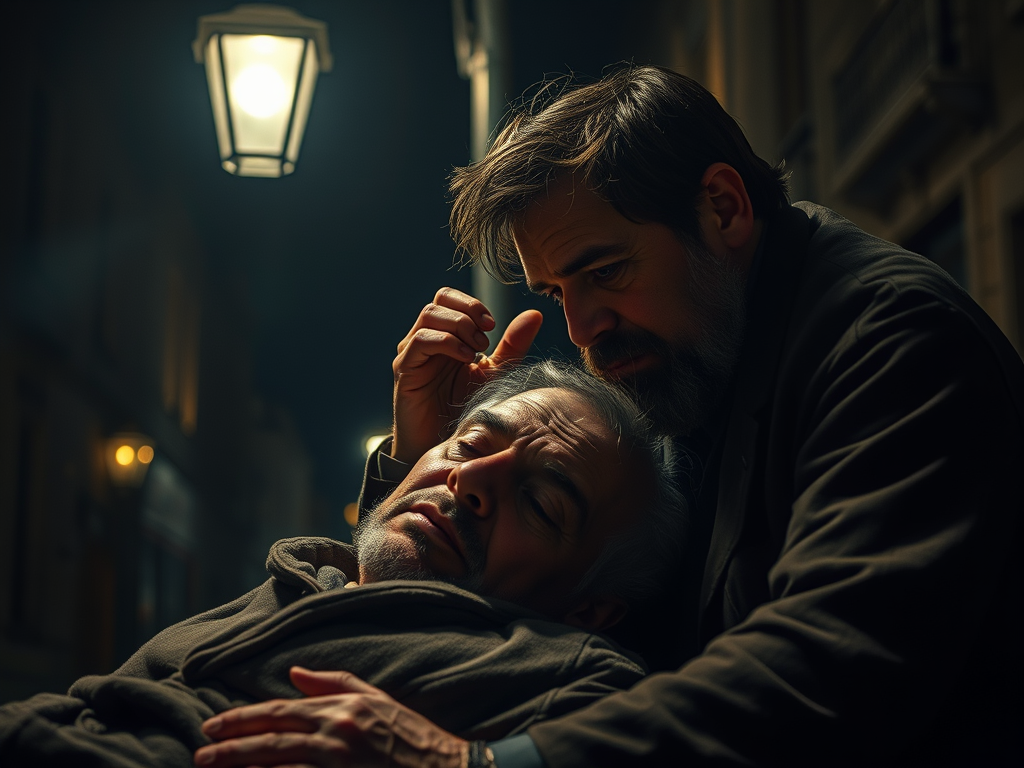
And then it happened.
A warmth surged through his hand, coursed into the beggar. The spasms stilled. Breath steadied. The man opened his eyes, dazed, then sat up whispering blessings profusely before stumbling away into the dark.
Jatin staggered back, staring at his trembling palm, still scented faintly of roses.
Heart hammering, he ran back into the house. The library was silent. The chair was empty. The fire had burned out, leaving only faint red embers. On the table lay the rose, glowing faintly in the dimness. He ran through the house searching for Mr. Y, for he wanted to give the gift back that he had somehow inadvertently inherited against his own wishes. But there were no signs of Mr. Y. He was gone, as if he never existed.
Jatin returned to the library, befuddled. He wasn’t sure of his next move. The silence pressed in — until Jatin sensed movement behind him.
The butler was there, though Jatin hadn’t heard a step, as if he had stepped out of the walls themselves. His face was unreadable, his presence more shadow than flesh.
“Sir,” he said, voice calm, almost reverent, “the house recognizes its keeper, and this library is its abode. Now it is yours to adorn.”
He bowed faintly and drifted back into the corridor, leaving Jatin with the rose, the silence, and the weight of what had passed.
Jatin closed his eyes, trembling, and whispered a prayer: “Almighty, if this is mine to bear, guide me. Do not let me lose my way.”
When he opened them, the rose remained. And so did the weight.
 The sound of thought