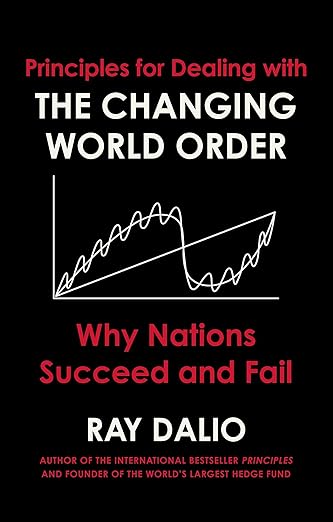
A while ago, I had read The Changing World Order by Ray Dalio, where he explores why empires rise and fall, the cycles they go through, and the impact these shifts have on the world.
Back then, I wasn’t in the social sector. But earlier today, when I happened to spot the book in my collection, I found myself wondering how Dalio’s insights apply to the social sector, especially in the Indian context.
Whether it’s rising inequality, broken systems, or under-represented voices, non-profits are often the early responders to deepening instability. We don’t just provide services, we build resilience, restore balance, and reimagine what’s possible when older systems begin to fray.
At TRRAIN (TRUST FOR RETAILERS & RETAIL ASSOCIATES OF INDIA), our work in enabling livelihoods for persons with disabilities is rooted in this belief: that inclusion is not a charity-driven afterthought, but a strategic necessity for a stable and equitable society.
Dalio reminds us that gaps in opportunity eventually lead to disorder, not necessarily in those words. In that sense, non-profits aren’t peripheral. They are stabilizers in the changing world order. The future will need more such institutions. Adaptive, values-driven, and deeply human-centered.
Whether the cycles of rise and decline can ever be broken is hard to say. But strong social organizations can certainly delay the inevitable; and make the fall gentler, and the rise more inclusive.
If you want to know more about what we do at TRRAIN, please visit https://trrain.org/.
 The sound of thought