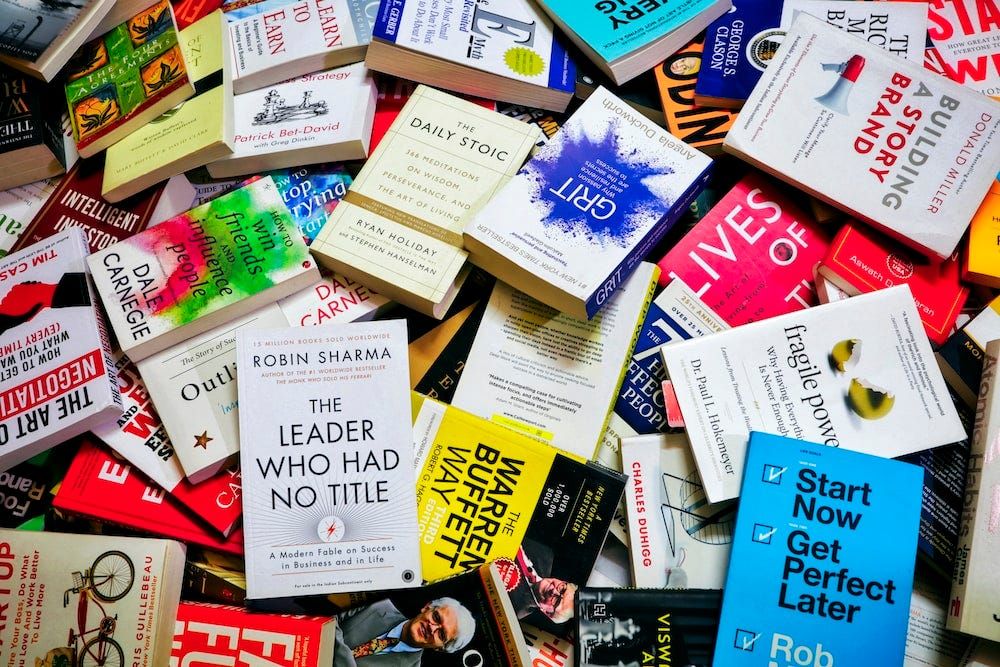
Self-improvement is not today’s mantra, but has never been so ubiquitous as today. Leadership is a sought-after skill and the shelves of bookstores and digital libraries are adorned with management and self-help books.
These books share the wisdom and experiences of seasoned professionals and thought leaders into easy-to-understand language. They offer practical advice, frameworks, and case studies that can enlighten the reader about effective management practices, personal development, and navigating professional challenges. They have proven anecdotes that can inspire to take action. Many self-help books are packed with practical exercises and techniques. Whether it’s time management hacks or communication tips, these tools can equip the readers to tackle their own goals head-on. They can challenge conventional thinking and broaden perspectives.
On the other hand, they have a tendency to oversimplify complex issues. While they offer practical solutions, those may not always be applicable in every context, or may fail to address the nuances of real-world challenges. Most of them have a one-size-fits-all approach. But the fact is, what works for one person might not work for another. Another issue I have with such books are the authors who write them may not always have the right credentials, as they are not about real-life experiences. Rather, just an ingenuity compiled in their cosy dens.
So should we read them, or not? While that is a tough one with no straight-forward reply, I use a simple, three-point decision process while getting such a book.
1. 𝐓𝐡𝐞 𝐜𝐫𝐞𝐝𝐞𝐧𝐭𝐢𝐚𝐥𝐬 𝐨𝐟 𝐭𝐡𝐞 𝐚𝐮𝐭𝐡𝐨𝐫 – For self-help books, I prefer authors who have learnt a thing or two from their personal experiences and therefore have earned a right to share that with others. For management books, the author has to be at the top of the profession and a known success story that inspires the book.
2. 𝐊𝐧𝐨𝐰 𝐲𝐨𝐮𝐫 𝐧𝐞𝐞𝐝𝐬 𝐟𝐢𝐫𝐬𝐭 – What do you intend to gain from them, should be clear to you. Are you looking to acquire new skills, or just seeking inspiration? If you have answered this, your chances of getting the right book increase many-fold.
3. 𝐂𝐨𝐧𝐭𝐞𝐱𝐭 𝐢𝐬 𝐯𝐞𝐫𝐲 𝐢𝐦𝐩𝐨𝐫𝐭𝐚𝐧𝐭 – If you are in India, an Indian context would be far more relatable than an American or a German context, while selecting a book. Applies to self-help books too. Similarly, for a financial services professional, an assembly-line success story in manufacturing may not be relevant, no matter how well the book has been written.
Once thing is certain – there would be no quick fixes. The reader must engage with the notion of the book, evaluate the concepts and gradually apply them in real life. Engaging the books and implementing the concepts is a slow but sure journey, if the book is right and the motivation to transform oneself is real.
 The sound of thought