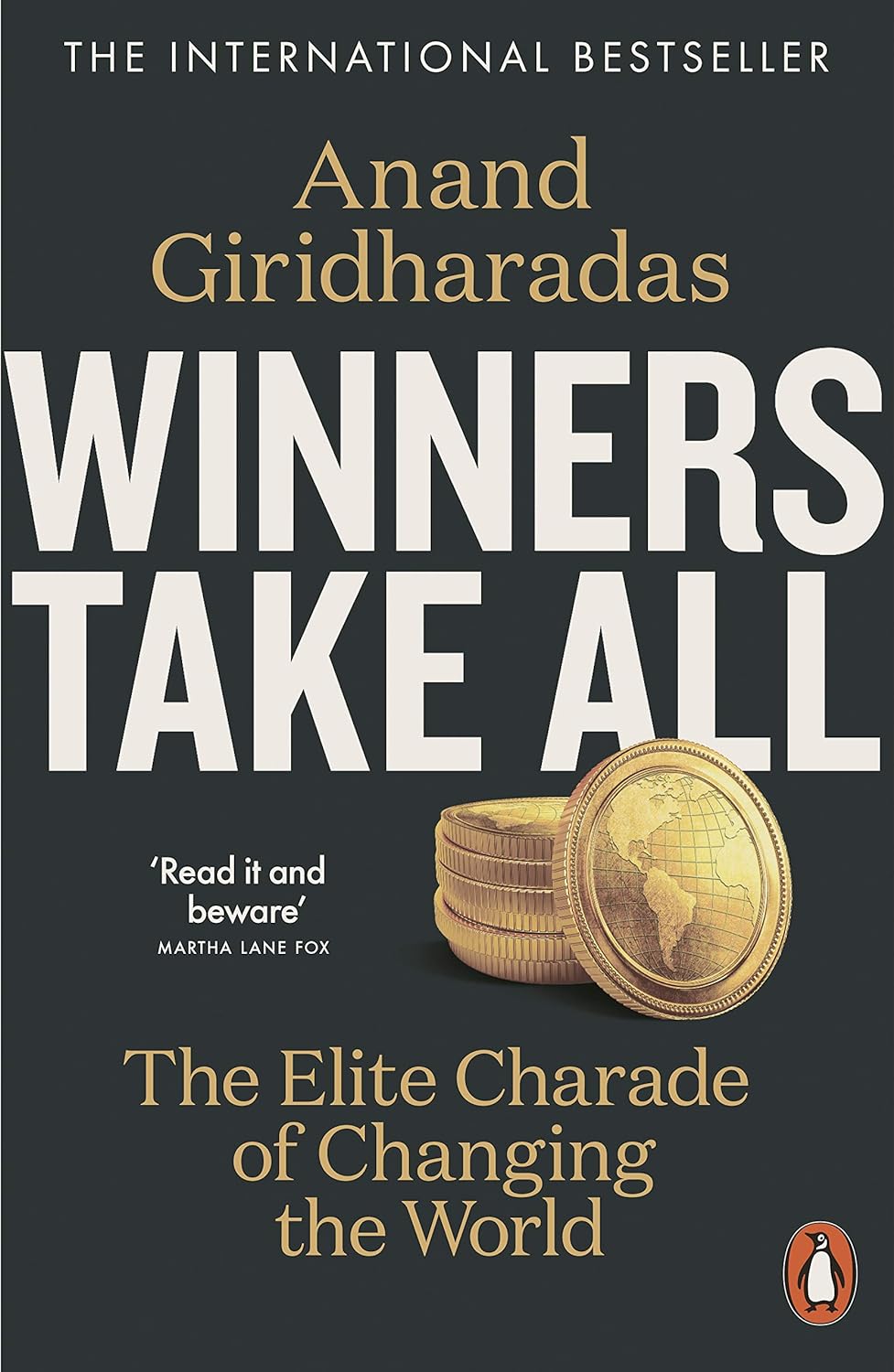
Winners Take All by Anand Giridharadas will force you to think, introspect and draw your own conclusions. The book is an assessment of the relationship between the elite and their attempts at bringing in social change. The author scrutinizes the world of philanthropy, revealing the complexities, motives and contradictions inherent in the efforts of the wealthy to address societal issues. While it is a compelling narrative, my perspective differs on certain aspects.
Giridharadas argues that the philanthropic endeavours of the elite often amount to a mere “charade of changing the world.” He challenges the sincerity of their intentions, suggesting that these efforts may serve to maintain the status quo rather than dismantling systemic issues. While this critique cannot be dismissed easily, it’s worth considering the positive impact that certain philanthropic initiatives can have – and have already had – on pressing social problems. In the Indian context, the CSR Act of 2013 has created a ground for a collaboration between the not-for-profit organizations and corporations to address social concerns, and there are several positives that have emerged since then. The locale of the book is US-centric and it is entirely possible that the situation there does not match with what we have witnessed in India and hence my disagreement may sound a little harsh. But that also highlights the fact that the book does not cover all possible examples and totally overlooks emerging countries, where the Corporate Social Responsibility (CSR) has a much bigger, positive impact.
Therefore, I find the author’s skepticism towards the influence of the wealthy on shaping social change overly dismissive of the potential for collaboration between the private and public sectors. Indeed, partnerships that leverage the resources and expertise of wealthy individuals and corporations have the potential to drive meaningful change, albeit within the existing system.
“Winners Take All” challenges us to question the motivations behind philanthropy and to examine the power dynamics at play. However, it’s essential to recognize that not all efforts by the elite are inherently self-serving. While I may not fully align with Giridharadas’ skepticism, the book undeniably sparks essential conversations about the intersection of wealth, power, and social responsibility.
 The sound of thought