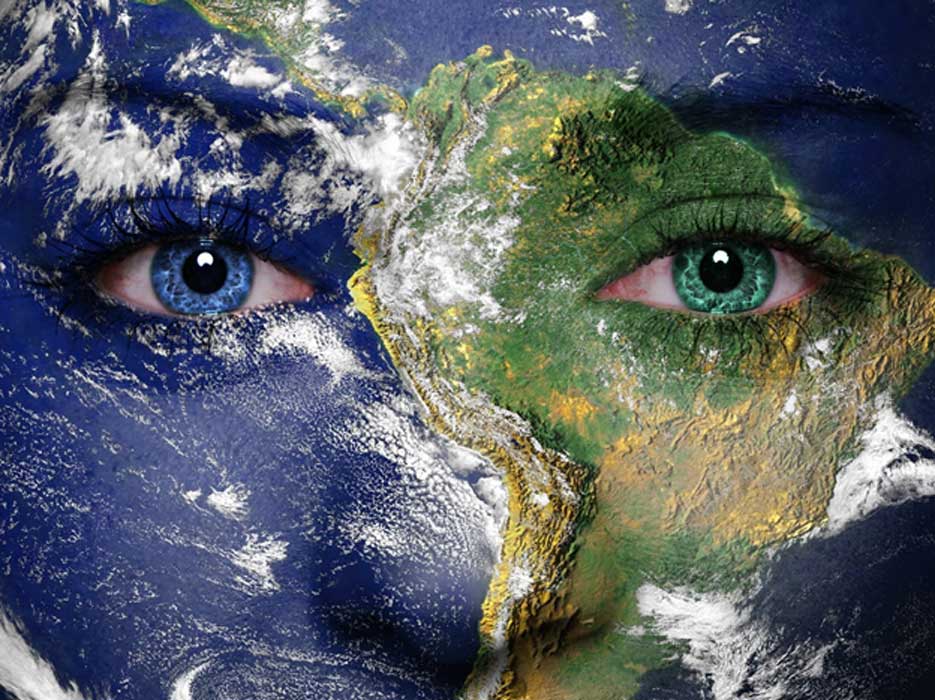
I recently came across the Gaia hypothesis, though in a slightly different context and not as a recommendation of the hypothesis itself. I read about the hypothesis out of curiosity however, which makes an interesting topic.
The hypothesis was formulated by James E Lovelock in 1970s. He claimed that the earth operates like one huge living, self-regulating organism. He named this organism as Gaia, the ancient Greek goddess of earth, hence the hypothesis title.
The self-regulating system works through a mechanism of feedback loops that keep the conditions on the planet within boundaries that are favourable to life. Various components like the atmosphere, oceans, and all living organisms interact to maintain a stable and habitable environment. Lovelock provided plenty of examples in support of his hypothesis, which were rejected first by the scientific community, but were gradually mainstreamed as the hypothesis got supported by some scientific evidence. Lovelock maintained an extremely positive outlook about earth’s health and was confident that the self-regulation would take care of any environmental damage caused by human industrialization of the globe.
Over next 2 days, I read a lot about the hypothesis, the frenzy it created and how it earned some acceptance. I was about to buy his book published in 1975. However, during this research, I came across his newer book “Revenge of Gaia: Why The Earth Is Fighting Back” and thought it would be better to go for this and got my Kindle edition immediately. Finished reading this today morning, and was amazed to see that Lovelock has turned extremely bitter and pessimistic to the extent that he throws away all the sustainable development efforts out of the window and urges for a more radical, and urgent action. Lovelock expresses deep concern about the accelerating impact of human activities, particularly the burning of fossil fuels, on the Earth’s climate and ecosystems. He argues that the massive release of greenhouse gases like carbon dioxide into the atmosphere is disrupting the delicate balance of the planet’s systems and pushing them toward a tipping point.
Ultimately, he makes the most damaging point – the Earth, through its self-regulating feedback mechanisms, could be responding to the impacts of human activities in a way that might not be conducive to human survival. This fightback would result in rising temperatures, changing weather patterns, and disruptions to ecosystems that could make certain regions less habitable and threaten the availability of resources necessary for human survival.
He does provide some solutions of his own. He supports adopting the nuclear energy in a big way and stop the use of fossil fuels for energy immediately. He also urges for preserving the ecosystems that are part of the feedback loops and also calls for a global collaboration to address the challenge. There are a few suggestions that may not sound very hopeful and impractical.
And so while the book does not offer infallible solutions, it does pose a question – is anyone listening? Are the governments across the world accepting that the problem is far more serious than believed? Are there visible actions for a shift from a sustainable to a more radical effort? This book is written in 2007 and clearly more work has happened since then, the timeline for achieving any significant change is largely uncertain. We need stronger political will, rapid technological advancements and a global cooperation to overcome the challenge.
At this moment, we simply seem to be releasing the oxygen masks in a plane, knowing very well that the crash is inevitable.
 The sound of thought
This is a very profound piece. Thanks for bringing Gaia into the limelight. Will read this Livelock up now.